

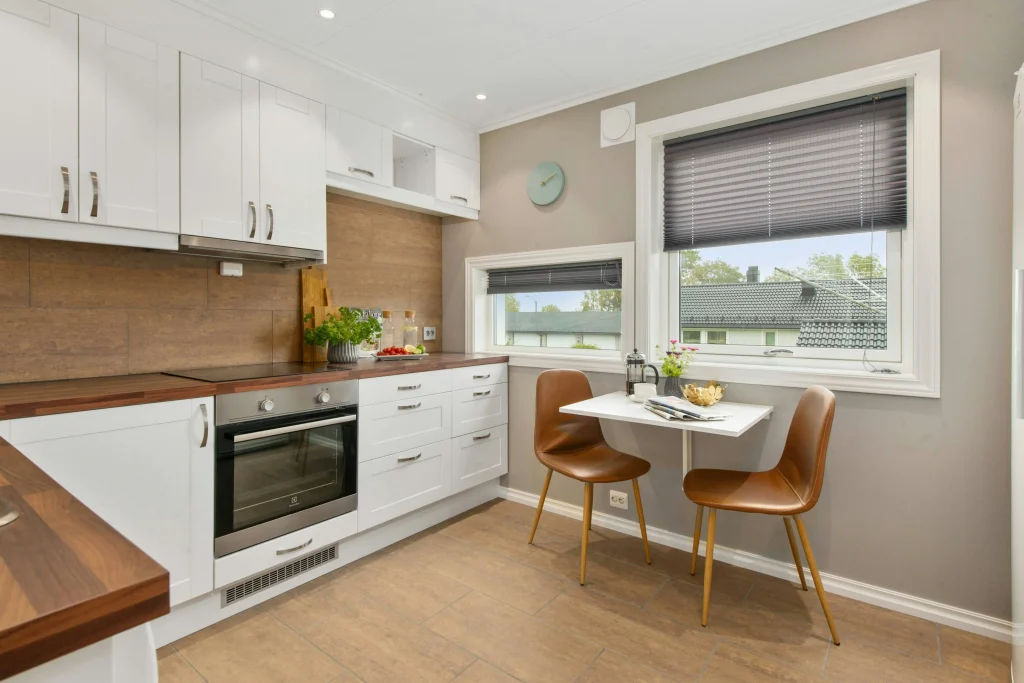
Plywood offers a contemporary take on traditional cabinetry. Crafted from multiple layers of wood veneers pressed together, plywood is renowned for its strength, durability, and stability. This makes it an ideal choice for the demanding environment of a kitchen.
Plywood kitchens are often associated with Scandinavian design, characterized by clean lines, functionality, and a focus on natural materials. However, with the right finishes and accessories, you can use plywood when you are looking for a bespoke kitchen style that suits any style, from minimalist to rustic.
Do You Have a Custom Project?
Book a free consultation to find the Bespoke Carpentry Solution for your home.
FREE QUOTE REQUESTIs Plywood Good for a Kitchen?
Yes, plywood is one of the best materials for kitchen cabinets because it is strong, durable, moisture-resistant, and can hold screws securely, making it suitable for long-term kitchen use.
High-quality plywood, especially BWP (Boiling Waterproof) or marine-grade plywood, performs well in kitchens because it handles humidity and occasional water exposure better than many alternatives. With proper sealing and a quality finish, plywood cabinets can last 15–25 years or more, depending on maintenance and usage.
How Long Does Plywood Cabinets Last?
Plywood cabinets are built to last. With proper care, you can expect them to be a part of your kitchen for 15 to 20 years or even longer. The layered construction of plywood makes it incredibly durable and resistant to warping, a common issue in kitchen environments.
Is a Plywood Kitchen Expensive?
Yes, a plywood kitchen is generally more expensive than kitchens made from materials like MDF or particle board, with costs increasing based on the plywood grade, thickness, finish, hardware, and kitchen size.
Plywood is considered a premium cabinet material because it offers better strength, moisture resistance, screw-holding ability, and longer durability. A typical plywood kitchen can cost around 20–40% more than a standard MDF or particle board kitchen, but it often provides better long-term value due to its lifespan and performance.
How Many Plywood Sheets Do You Need for a Kitchen?
A typical kitchen requires around 10–20 plywood sheets, depending on the kitchen size, layout, cabinet design, and whether the doors and backs are also made from plywood.
Example: Estimating Plywood for a Kitchen
Let’s say you have a small kitchen that’s about 8 feet by 10 feet. You plan to build simple, flat-panel cabinets without too many doors or drawers.
To get a rough estimate, you can start by calculating the total square footage of your kitchen: 8 feet x 10 feet = 80 square feet.
A standard plywood sheet is 4 feet by 8 feet, which equals 32 square feet.
Dividing the total square footage of your kitchen by the square footage of one plywood sheet gives you: 80 square feet / 32 square feet/sheet = 2.5 sheets.
So, you’d probably need about 3 sheets of plywood to start.
Can Plywood Cabinets Get Wet?
Yes, plywood cabinets can get wet, but prolonged exposure to moisture can cause swelling, warping, delamination, and reduced durability, especially if the plywood is not moisture-resistant or properly sealed.
Plywood cabinets handle occasional water contact better when they are made with marine-grade or BWP (Boiling Waterproof) plywood and finished with a protective laminate, veneer, or paint coating. However, areas like the sink cabinet, dishwasher area, and wet zones need proper edge sealing and waterproofing to prevent water from entering the plywood layers.
Which Plywood Material is Best for Kitchen Interior?
For kitchen interiors, you’ll want a BWP (Boiling Waterproof) Plywood that is highly resistant to moisture and humidity. These conditions are common in kitchens due to cooking, washing dishes, and general use.
1. BWP (Boiling Waterproof) Plywood:
This is the gold standard for kitchen cabinets and other interior elements.
It can withstand prolonged exposure to water and high temperatures. Offers excellent durability and longevity.
2. MR (Moisture Resistant) Plywood:
A good option for areas with moderate moisture levels. Suitable for kitchen cabinets but might not be the best choice for areas with direct water contact.
Offers a balance of cost-effectiveness and durability.
What is the Gap Between Plywood and Flooring?
The recommended gap between plywood and flooring is around 1/8 inch to 1/4 inch (3–6 mm) around the edges of the plywood sheets and walls to allow for natural expansion and contraction caused by moisture and temperature changes.
This expansion gap prevents plywood from buckling, swelling, or pushing against surrounding surfaces when it absorbs moisture. For subfloor installations, plywood sheets are also typically installed with a small 1/8 inch (3 mm) gap between adjacent sheets to allow movement and prevent squeaking or warping.
What Thickness is Plywood Used in Kitchens?
The thickness of plywood used in kitchens typically ranges from 3/8 inch (9.5mm) to 3/4 inch (19mm).
Sizes of Thickness
3/8 inch (9.5mm) plywood: Suitable for lighter-duty cabinets such as upper cabinets or smaller base cabinets.
1/2 inch (12.7mm) plywood: Commonly used for cabinet boxes and shelves. Offers a good balance of strength and weight.
3/4 inch (19mm) plywood: Ideal for larger, heavier cabinets, such as base cabinets that will hold appliances or heavy cookware.
Do Plywood Cabinets Warp?
Yes, plywood cabinets can warp if they are exposed to excessive moisture, poor-quality plywood, improper installation, or uneven finishing, but high-quality waterproof plywood cabinets with proper sealing are much less likely to warp.
Warping usually happens when plywood absorbs moisture unevenly, causing the layers to expand and contract differently. Using BWP (Boiling Waterproof) plywood, sealing all edges, applying a protective finish, and ensuring proper ventilation can help prevent plywood cabinets from bending or losing their shape.