

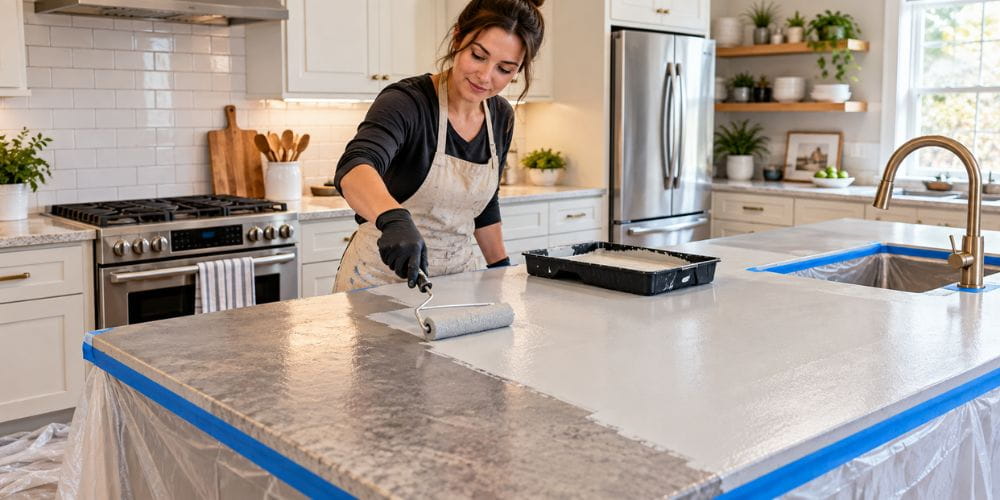
The kind of outdated kitchen counter may showcase the whole spacing as as dull and old spectacle among everything else in the house. For you see, the colour may not match the cabinets, tiny stains may have appeared around the washbasin and years of use may have worn the surface.
You can replace the countertop, but that’s not necessarily the only option. Sometimes homeowners view painting as a quicker approach to update the kitchen without a complete overhaul.
However, it is contingent upon how much use the countertop gets and what materials and surface conditions are employed. In addition, Horizon Bespoke Joinery gets to resolve such matters for their customers. As well as how a painted countertop may improve the appearance, according to our perspective in this field. However, it will require the proper treatment to cope with ordinary kitchen life.
Painted Countertops Types
Can You Paint Kitchen Countertops? It’s not some One Size Fits All result for every kitchen. You can do a good job on certain surfaces and others may not be worth the effort.
Laminate countertops may be painted since they offer a flat surface to be prepared before painting. If the tile and wood surfaces are in excellent repair, they may be painted as well.
A tabletop near a washbasin might be always wet. A surface near a kettle or coffee machine might take heat and repetitive marks. These conditions may test any coating.
Before painting the surface should be checked for:
- Cracks that go deeper than the surface.
- Swelling from dampness.
- Loose areas.
- Worn edges.
Paint may only temporarily mask the issue if the countertop is fundamentally crumbling.
Painting Surface Preparation
So many countertop painting projects never get beyond the point of opening the paint container. Preparation is usually the culprit.
Cooking, cleaning products and regular residue leave oil on kitchen surfaces. A countertop might seem clean yet have a coating on it that will not enable paint to stick correctly.
But the surface has to be cleaned very well beforehand. Sanding it once clean takes away part of the smoothness and gives the coating something to cling to.
Preparation usually includes:
- Cleaning grease and grime.
- Light sanding of surface.
- Filling little imperfections.
- Protection of cabinets and space around them.
- Use the right primer.
Special care is typically needed around the sink and around the edges of the sink. These areas are more likely to have contact with moisture than the center of the tabletop.
Several more coats of paint subsequently won’t make up for a few hours spent preparing the surface.
Selecting The Best Countertop Paints
Normal wall paint isn’t meant for use on kitchen counters. These surfaces should be resistant to cleaning, moisture and to constant contact with kitchen objects.
The finish selected should be appropriate to the material and amount of wear of the countertop. A rarely used kitchen worktop will probably be less worn than a busy family kitchen where meals are cooked daily.
The finish also changes its appearance. Other homeowners want a shinier, more polished appearance while others want a softer finish that does a little better job of hiding any imperfections.
Colour choosing also requires care. A countertop that looks fantastic in a sample may seem different when surrounded by kitchen cabinets, flooring and natural light.
Before you choose a colour, it helps to consider about:
- Current cabinet colour
- Kitchen light.
- General nature of the room.
- How the markings will look over time.
It is better to choose a colour for practical purposes rather than pick a hue because it looks beautiful.
Faults that affect the final result
Countertop painting seems easy in fast makeover videos, but such tasks usually omit the wait and prep work.
A typical error is painting too soon after washing or sanding. The initial coat is applied on a well prepared surface.
Another difficulty is the expectation that painted worktops would perform as well as stone or properly placed counters. Paint may make anything appear fresh again, but it does not alter what the object is.
Other problems include :
- No priming required.
- With extremely thick coatings.
- after the use of harsh cleaners
- Hot stuff on the surface.
- Use the counter while the coating is still wet.
Painted countertops need special maintenance. The life of the surface may be reduced by roughening using rough materials or by severe use.
How Long Do Painted Countertops Live?
The longevity of a painted counter surface relies on the quality of the job and the frequency of kitchen use.
With proper upkeep, a countertop in a little-used kitchen may look good for years. If you’re in a busy kitchen with heavy equipment use, frequent cooking and spills, you’ll likely see wear sooner.
If you are looking for a visual makeover, painted countertops are a wonderful alternative. They may freshen up a tired kitchen and stave off a whole overhaul.
But they are not often a permanent substitute for new materials.
If you are a homeowner contemplating a comprehensive kitchen renovation, Bespoke Kitchen Renovations may take a more extensive approach that looks at the layout, storage and finishes in a holistic way.
When to Replace Your Countertop?
Painting is not always the smartest thing. Some counters have reached the stage where a fresh finish will not solve the situation.
If the surface has these things, replacing is the better choice:
- Water damage is extensive.
- Large cracks.
- Bent edges.
- Poor running.
The counter needs to hold up to genuine kitchen action. But a nicer-looking surface that nonetheless creates everyday challenges doesn’t provide much value.
Some houses may need a little freshening. Others could benefit from long-term investment in refurbishment.
Conclusion
Painting a kitchen countertop can be a useful way to update an older space when the existing surface is suitable and properly prepared. The final result depends on realistic expectations, careful preparation and choosing the right materials.
For homeowners considering a complete kitchen transformation, Bespoke Kitchen Renovations can help create a space designed around long-term use and personal style.