

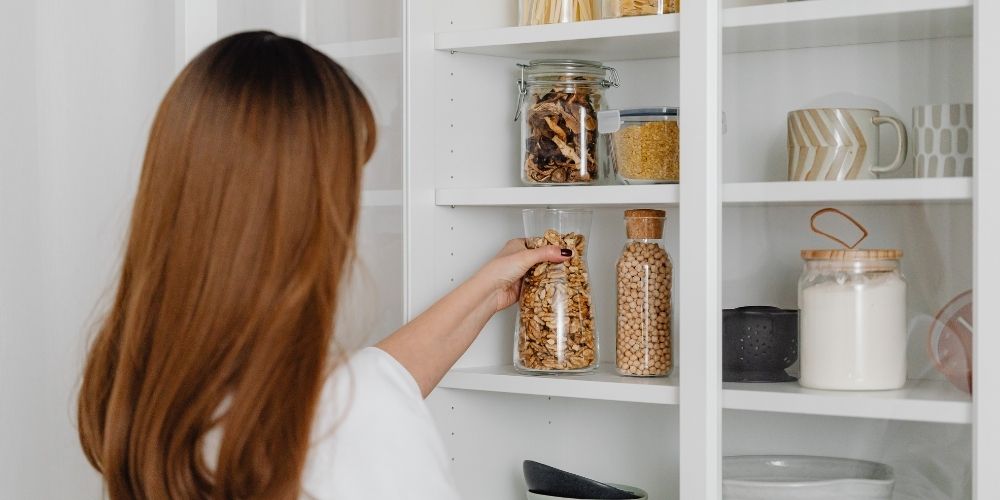
To organise a pantry cabinet, begin by clearing everything out and cleaning the shelves. Next, categorize your items into sections like snacks, canned goods, and baking ingredients. Use clear containers for things like pasta and flour to keep them visible and easy to access. Maximize space by adding shelves, bins, and rotating organizers. Place frequently used items at the front and heavier items on lower shelves to ensure everything stays organized and accessible.
Step By Step To Organise a Pantry Cabinet
Empty and Clean the Pantry
Start by removing all items from the pantry. This gives you a fresh slate and helps you assess what you have. Clean the shelves thoroughly to ensure that no crumbs or spills remain, which could attract pests or cause odors. Wipe down the shelves with a mild cleaning solution and allow them to dry completely before replacing items.
Categorize the Items
Sort your pantry items into categories such as dry goods (pasta, rice), canned goods, spices, snacks, and baking ingredients. This helps to group similar items together, making it easier to find what you need. You can also separate items based on frequency of use or expiration dates. For a custom kitchen pantry cabinet, be sure to visit Horizon Bespoke Joinery for customized kitchen furniture and cabinets.
Use Clear Storage Containers
Store items in clear, airtight containers to keep them fresh and visible. This is especially useful for products like flour, sugar, and snacks, as you can easily see when they are running low. Using containers also prevents spills and helps with portion control. Opt for stackable containers to maximize space.
Label Everything
Label your containers and shelves. This step is key to maintaining an organized pantry over time. You can use a label maker or handwrite labels on masking tape. Label the container with the item name, quantity, and expiration date, if applicable. This ensures that you use items before they expire and makes it easy for everyone in the household to find what they need.
Place Items Strategically
Place the most frequently used items at eye level for easy access. Store heavier items on lower shelves and lighter, bulkier items on higher shelves. Items that are less frequently used (such as special ingredients or seasonal products) can be stored at the back or on the highest shelves.
Maintain Regularly
After organizing, commit to maintaining the system. Check your pantry regularly for expired items, and clean it every few months to keep it organized. Reorganize the pantry if you notice that certain items aren’t working in the current system or as your family’s needs change.
How to Organize a Pantry Cabinet with Deep Shelves?
To organize a pantry with deep shelves, use pull-out bins, tiered risers, and rotating organizers to enhance accessibility and visibility. Categorize items in clear, labeled containers or baskets that slide out easily. Place everyday items at the front, while storing less frequently used ones at the back to optimize space. Installing pull-out shelves or drawers helps keep everything within reach and prevents items from being forgotten in the back.
Step-by-Step To Organize a Pantry Cabinet with Deep Shelves
Empty and Clean the Pantry
Start by removing everything from the pantry. This allows you to clean the shelves properly and gives you a chance to inspect everything, including expiration dates. Clean the shelves with a mild cleaner and ensure they are completely dry before putting items back.
Use Pull-Out Drawers or Bins
For deep shelves, consider installing pull-out drawers or bins. These will help you access items at the back more easily without having to reach or move other items around. Bins or baskets can also help keep smaller items together, preventing them from getting lost in the back.
Categorize Your Items
Sort your pantry items into clear categories, such as baking, snacks, canned goods, and grains. Group similar items together to make it easier to find them when you need them. You can also use containers or dividers to separate different types of items within each category.
Use Clear Containers and Labels
Store dry items, like pasta, rice, and flour, in clear, airtight containers. This keeps them fresh and visible. Label each container with the item name, the quantity, and the expiration date. Labels ensure you can easily identify what’s inside and help you track when things need to be replaced.
Store Items Strategically
Place frequently used items at the front or on easily accessible pull-out drawers. Store bulkier or heavier items at the back or on the bottom shelves. This way, you maximize space while ensuring that you can quickly access the items you use most often.
Regular Maintenance
To keep the pantry organized, make it a habit to check and tidy it regularly. Clear out expired or unused items and adjust the layout if needed. You can also rotate items to make sure older products are used first.