 Skip to content

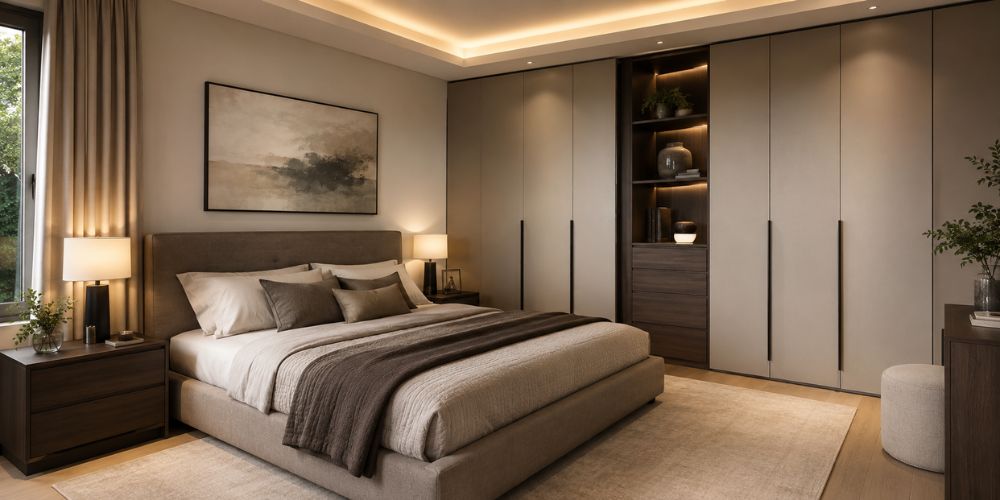
A bedroom can be almost right and still feel awkward. The bed fits. The colour works. The curtains are fine. Then the wardrobe goes in and suddenly the room feels tighter than it should. The wardrobe is not only storage. It changes how the bedroom feels, how light moves through it and how easily the room works in the morning.
That is why where to put wardrobe in bedroom layouts deserves a little patience. In homes planned with Horizon Bespoke Joinery, the better starting point is the room itself. Not the empty wall. Not the biggest gap. The room has to stay calm, open enough and simple to live with.
The Bed Comes First
The bed is the piece that usually settles the room. It decides the walking route. It decides where the eye lands from the doorway. It also decides whether the bedroom feels relaxed or squeezed.
A wardrobe that crowds the bed will always feel slightly wrong. There may be enough space on paper, but a tight side gap is noticed every day. So is a drawer that cannot open properly at the foot of the bed.
The bed needs breathing room first. Storage has to work around that.
Find the Quiet Wall
Most bedrooms have one wall that does not ask for much. No window cutting through it. No door swing. No radiator sitting awkwardly in the middle. That quiet wall is often the best place for a wardrobe.
A wardrobe placed there can feel settled rather than forced. It gives the room one clear storage zone. It also stops furniture from being scattered around in pieces.
This matters even more in a smaller bedroom. Too many separate items make the room look busy. One clean storage run can feel calmer.
Keep the Doorway Clear
The doorway sets the first feeling of the bedroom. If a wardrobe sits too close to it, the room can feel blocked before anyone has properly stepped inside.
There are practical annoyances too. The room door may catch the wardrobe door. A drawer may pull out halfway. A laundry basket may not pass through easily. These are not big design problems, but they become daily irritations.
A bedroom should open easily. That small sense of space at the entrance makes the whole room feel kinder.
Do Not Crowd the Window
A window does more than bring in light. It gives the bedroom a bit of lift. A tall wardrobe too close to it can make the room feel boxed in, even if the storage technically fits.
Curtains need space. Blinds need access. Daylight needs room to spread across the wall and floor. When a wardrobe swallows the side of a window, the corner can look heavy.
Sometimes storage beside a window works beautifully. It just needs enough room around the opening so the light still feels natural.
Awkward Spaces Can Work Hard
Not every good wardrobe wall looks perfect at first. Alcoves, sloped ceilings and narrow corners can all seem difficult with standard furniture. In a fitted design, those same areas can become useful.
A recess can hold hanging space. A low ceiling line can take shelving, shoes or folded clothes. A narrow side wall may be right for smaller storage instead of wasting the space completely.
This is where made-to-measure work earns its place. It follows the room instead of fighting it.
Plan Around Real Mornings
A wardrobe position should make the morning easier. That sounds simple, but it is often forgotten.
Doors need space to open. Drawers need a clear pull out area. A mirror needs enough distance in front of it. Shoes, laundry and everyday clothes should not end up scattered because the storage is awkward to reach.
The right spot is not just where the wardrobe fits. It is where the room still feels easy when someone is getting dressed, making the bed or putting laundry away.
Conclusion
The best wardrobe position usually protects the bed space, keeps the doorway open, respects the window and uses awkward areas with care. Some rooms suit one long wall. Others feel better with storage tucked into a recess or shaped around a corner.
When freestanding furniture leaves gaps, wastes height or makes the room feel unfinished, built in wardrobes can give the bedroom a cleaner shape. The room feels planned, not patched together. That is often the difference people feel before they can explain it.
