

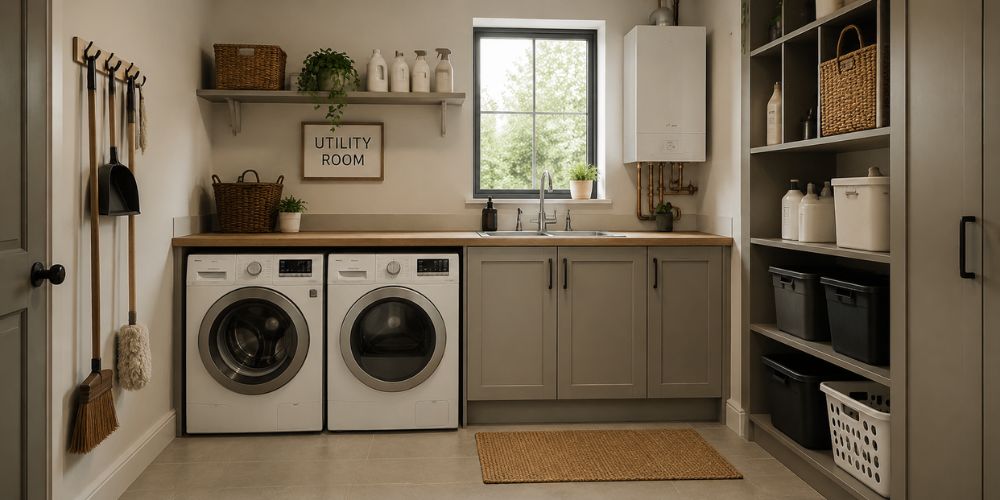
A utility room usually shows what the rest of the house is trying to hide. The laundry waiting its turn. The muddy shoes by the door. The bottle of stain remover that never goes back in the cupboard. It is a useful room, but useful rooms can start to feel heavy when everything inside them is only half put away.
That is why utility room decor ideas need to begin with the way the room actually behaves. A clean look will not last if the layout keeps fighting daily life. The better answer is storage that suits the routine, surfaces that can take a bit of use and finishes that make the room feel like part of the home. That is where fitted work from Horizon Bespoke Joinery can give the space a calmer shape.
Watch How the Room Gets Messy
A good utility room is not designed from a perfect photo. It is designed from a normal weekday.
The best clues are already there. Coats on the chair. Shoes under the sink. Laundry on top of the dryer. Cleaning cloths pushed into a drawer with ten other things.
Those little habits show what the room is missing. If bags always land near the door, storage should be there. If bottles crowd the counter, the cupboard is either too small or too far away. If baskets block the path, the layout needs more breathing space.
The room is not failing. It is asking for a better plan.
Make Storage Feel Natural
Storage should not make a utility room harder to use. It should make tidying almost automatic.
Tall cupboards work well for the awkward items. Mops, ironing boards, hoovers and long brushes need height. Drawers are better for small things such as pegs, cloths, laundry pods and pet supplies. Closed cabinets are useful for the items that never look calm on display.
Open shelves can still have a place. A shelf with a few baskets or folded towels can soften the room. Too many visible items can quickly pull the space back into clutter.
The most useful storage is the kind a household will actually use when everyone is busy.
Keep the Floor Clear
The floor changes the whole mood of a utility room. Once baskets, boots and bags spread across it, the room feels smaller straight away.
Wall space can take some pressure off.
Hooks near the door can hold coats before they reach the back of a chair. A rail above the worktop can help with clothes that need to dry indoors. A shallow shelf can hold everyday items without stealing counter space.
This does not mean every wall needs to be filled. A utility room still needs quiet space. The point is to lift the right things off the floor so the room feels easier to move through.
Give Chores a Proper Surface
A worktop is one of the most useful parts of a utility room. Without it, clothes get folded on top of machines. Baskets sit on the floor. Cleaning products move from place to place because there is no proper landing spot.
A simple counter above the washer and dryer can change that.
It gives laundry somewhere to be sorted. It gives baskets somewhere to pause. It gives the room a working centre instead of a collection of separate items.
That one practical surface often makes the space feel more finished than decoration ever could.
Let the Machines Settle In
Now, your typical items such as your washing machines and dryers are not pretty, but they do not need to dominate the room.
As well as how those fitted cabinetry can make appliances feel less exposed. When machines sit within a planned run of units, the room looks calmer. Pipes, gaps and loose storage are easier to manage too.
This matters most in homes where the utility room sits close to the kitchen, back door or hallway. The space should not feel like a forgotten corner. It should feel connected to the rest of the house.
A neat cabinet line can do that quietly.
Choose Finishes That Forgive
A utility room needs finishes that can handle real use. Damp coats, warm laundry, muddy shoes and cleaning spills are part of the room’s job.
Soft white can brighten a tight space. Muted green can feel fresh without looking loud. Warm grey can calm the room. Natural wood can stop the space from feeling cold.
Darker lower cabinets can be sensible where marks happen more often. Easy-clean flooring matters too. Handles should feel strong. Cabinet fronts should wipe down without making every fingerprint obvious.
A utility room should still look good after a full laundry day.
Add Warmth in Small Ways
A cleaner utility room does not have to feel plain. It only needs the right details.
A woven basket can soften a corner. A small print can make the room feel less forgotten. A timber shelf can warm up a wall. A simple blind can make the space feel more settled.
The key is restraint. If a decorative piece has to be moved every time someone folds clothes, it is not helping.
The room can have character. It just needs room to work first.
Conclusion
The strongest utility room decor ideas are the ones that make daily life feel lighter. Good storage clears the clutter. A proper worktop gives chores a place to land. Calm finishes make the room easier to live with.
For a space shaped around real routines, Utility Rooms can bring the storage, layout and finish together in a way that feels useful, clean and natural.