

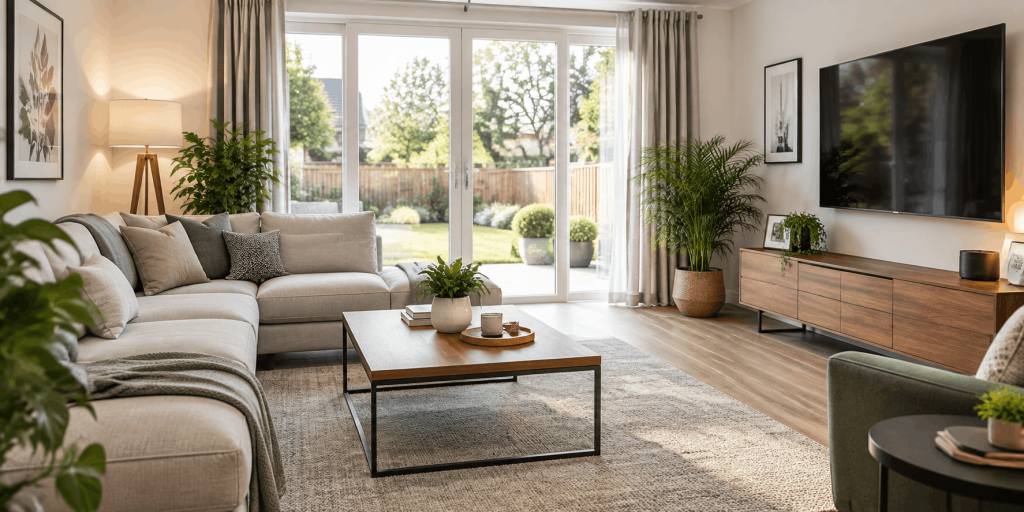
A living room can look perfectly fine at noon then feel oddly flat a few hours later. The sofa has not moved. Nothing has changed. The daylight has simply disappeared from one side of the room, leaving the darker furniture and busy corners to take over.
Anyone looking into how to brighten dark living room spaces may be tempted to reach for white paint first. Sometimes that helps. Sometimes the room is really fighting a layout problem. Horizon Bespoke Joinery works with rooms where storage, alcoves and furniture proportions all influence how open the space feels. A few small changes can shift that balance quite a bit.
See Where the Daylight Actually Goes
A window can be fairly large and still do less work than expected.
Heavy curtains may cover part of the glass when pulled back. A tall cabinet beside the frame can leave half the wall in shadow. Even a collection of plants, frames and ornaments on the sill can make the opening feel tighter.
The room tells a different story at different times of day. Morning light may reach the sofa but miss the opposite wall completely. Late afternoon may expose a gloomy corner that looked harmless earlier.
Watching that change for a day is often more useful than guessing.
Move the Sofa Before Buying Another Lamp
Large furniture quietly controls a room. A deep sofa placed across the brightest wall can soak up a lot of visual space. Tall shelving beside a window can stop light spreading sideways. A chunky coffee table may not block daylight at all, yet it can still make the centre feel crowded.
Horizon’s guide to arranging furniture in a small living room deals with the same problem from a space point of view. The two issues often overlap.
Sometimes the biggest improvement costs nothing. One chair moves. The sofa shifts a little. More floor appears. Suddenly the room feels less boxed in.
Light Colours Need Some Warmth
Pure white is usually the first suggestion for a dark room. It reflects light well, but it can feel stark when the room gets little direct sun.
Warm white, soft cream, light stone and pale beige tend to be easier to live with. They still keep the walls bright without giving the room that chilly, freshly plastered feeling.
The ceiling can stay lighter too. So can a large rug or curtain fabric.
Dark colours do not have to disappear. A walnut cabinet or deep green chair can stop the room becoming bland. The trouble usually starts when every big surface is doing the same dark job.
The ideas in Horizon’s cosy living room guide show how warm colours, texture and lighting can sit together without making the space feel heavy.
A Mirror Needs the Right Wall
A mirror does not produce light. It only gives existing light somewhere else to go.
That sounds obvious, yet mirrors often end up on the emptiest wall rather than the most useful one. A large mirror facing a dark corner may look attractive without brightening much at all.
Placed opposite a window, it can send some daylight back across the room. A position slightly beside the window can also work if the reflection catches a brighter wall.
There is no need to guess straight away. A mirror can rest against different walls for a day or two before anyone reaches for the drill.
One Ceiling Light Rarely Does Enough
Even a reasonably bright living room can become gloomy after sunset.
The usual culprit is one ceiling fitting trying to light everything. It handles the middle of the room. The corners are left to fend for themselves.
A floor lamp beside a sofa changes one patch. A table lamp deals with another. Small lights within shelving can stop a large cabinet disappearing into a dark mass at night.
Bulb colour makes a difference as well. A cool white ceiling bulb beside very warm lamps can look mismatched rather than bright. Similar colour temperatures make the room feel much more settled.
Storage Can Become Part of the Problem
A room may need storage badly, but the wrong storage can make it look darker.
A deep freestanding cabinet sticks farther into the room than most people notice at first. It takes up floor space, adds another shadow and may cover a section of wall that was helping carry light.
Awkward recesses are often a better place for storage. Properly sized alcove units can keep cupboards and shelving closer to the wall without crowding the main living area.
Open shelves need a little restraint too. Shelves packed solid with books and ornaments soon read as one heavy block. Leaving a few gaps lets some wall show through.
Small detail. Big difference.
Let Some Floor Stay Visible
Not every empty gap needs something in it.
A spare chair, another basket or a second side table can look harmless when bought separately. Put all three into an already dark living room and the floor begins disappearing.
Furniture with slimmer legs can help because more flooring remains visible beneath it. Pale timber can feel lighter than a large dark finish. Glass can work for smaller tables where it suits the household.
The room does not need to look minimal. It just needs enough breathing space for each larger piece to stand on its own.
Conclusion
A gloomy living room often improves through ordinary changes rather than one big makeover. A cabinet moves away from the window. The curtains expose more glass. One dark corner gets a lamp. A crowded shelf loses a few things.
Where bulky storage or difficult wall shapes are making the room feel heavier, fitted living room furniture can make better use of the available space. The room can still have dark timber, colour and character. It simply needs fewer obstacles between the daylight and everything else.