

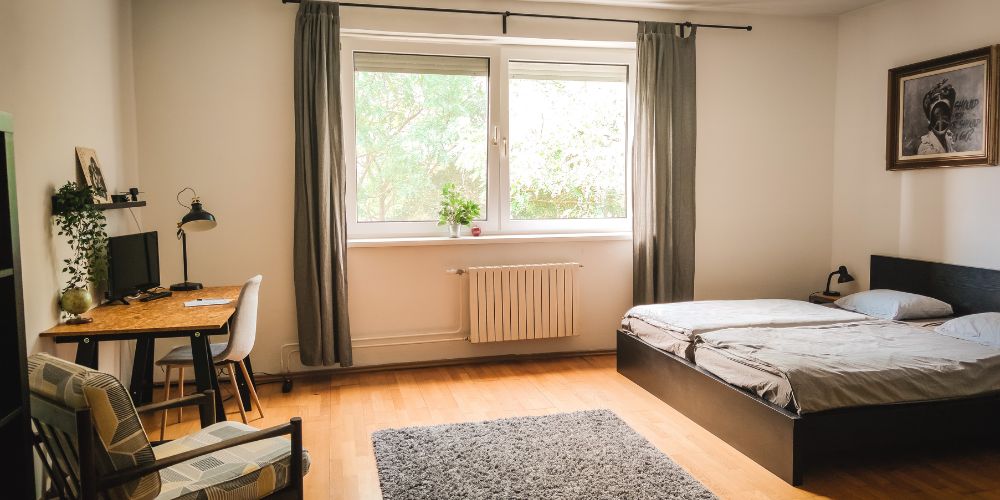
To mix and match bedroom furniture successfully, combine a maximum of 3 different materials, keep your nightstand height within 2 to 4 inches of your mattress top, and follow the 60-30-10 rule for your furniture finishes.
1. Start With the Bed as the Main Piece
The bed is usually the largest and most noticeable item in a bedroom, so use it as the starting point. Choose the bed first, then select other furniture around its style, colour, and size.
Example
Upholstered grey bed → wooden bedside tables + simple dresser
Dark walnut bed → lighter oak wardrobe + neutral accessories
Modern platform bed → traditional wooden chest for contrast
2. Follow the 60-30-10 Colour Rule
Use a simple colour balance to prevent the room from looking mismatched:
- 60% Main colour: walls, large furniture, flooring
- 30% Secondary colour: wardrobe, bedside tables, curtains, rugs
- 10% Accent colour: cushions, artwork, lamps, decorative items
For example:
- 60% warm beige (walls and bed)
- 30% natural wood tones (dresser and side tables)
- 10% black metal accents (lamps and handles)
This keeps different furniture pieces connected.
3. Mix Wood Finishes Correctly
Different wood colours can work together, but avoid using too many unrelated shades.
A good method:
- Choose one dominant wood tone for around 60–70% of wooden furniture.
- Add one secondary wood tone for contrast.
- Use neutral colours like white, beige, grey, or black to connect them.
Avoid combining three or more different wood colours because it can make the room feel unplanned.
4. Combine Different Materials
Mixing materials creates depth and prevents the bedroom from looking like a furniture showroom.
Good combinations include:
- Wood + fabric → warm and comfortable look
- Wood + metal → modern industrial style
- Upholstered bed + wooden dresser → balanced contrast
- Glass or mirror surfaces + solid wood → lighter appearance
Use around 2–4 main materials in one bedroom to keep the design controlled.
5. Keep Furniture Sizes Balanced
Furniture should have similar visual weight. A large bed should not be paired with very small bedside tables or a tiny dresser.
Recommended spacing:
- Keep 24–36 inches (60–90 cm) of walking space around the bed where possible.
- Bedside tables should usually be close to the height of the mattress for comfortable use.
- Avoid filling every empty corner because open space helps the room feel larger.
6. Mix Styles Carefully
You can combine different styles, but one style should remain dominant.
A useful approach:
70% main style + 30% contrasting style
Examples:
70% modern furniture + 30% vintage accessories
70% rustic furniture + 30% modern lighting
70% traditional furniture + 30% contemporary décor