

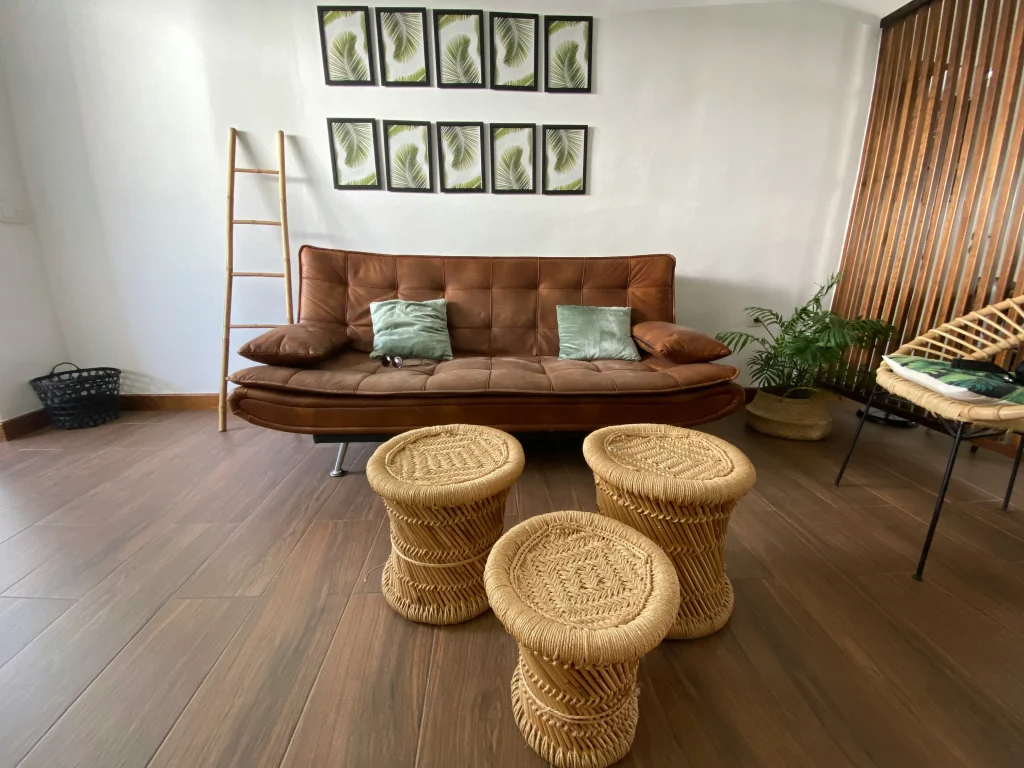
What is a Laminate Flooring?
Laminate flooring is a manufactured flooring material made by pressing multiple layers of wood-based fibres, decorative paper, and protective resins together under high pressure and heat. The top layer contains a high-resolution printed design that replicates the appearance of hardwood, stone, or tile, while the inner core provides strength and stability.
Do You Have a Custom Project?
Book a free consultation to find the Bespoke Carpentry Solution for your home.
FREE QUOTE REQUESTHow is Laminate Flooring Made of?
Laminate flooring is made by fusing multiple layers of wood fibres, decorative paper, and protective resin coatings together under high heat and pressure. The manufacturing process creates a dense, stable plank with a realistic wood or stone appearance without using a solid hardwood surface.
1. The core layer makes up most of the plank
The main body of laminate flooring is usually made from High-Density Fibreboard (HDF), which accounts for the majority of the plank thickness. HDF is produced by compressing refined wood fibres with resin at high pressure, creating a dense core that provides structural strength.
- Typical HDF density: around 800–1,000 kg/m³
- Common laminate thickness: 8 mm–12 mm
The higher density of the core generally improves impact resistance, locking strength, and dimensional stability.
2. The surface is not real wood
Laminate flooring does not contain a hardwood top layer. Instead, the appearance comes from a high-resolution photographic layer printed onto decorative paper. This layer can reproduce thousands of wood patterns, including oak, maple, walnut, and other natural designs.
3. The protective wear layer contains aluminium oxide
The top surface is coated with a transparent melamine-based wear layer that often includes aluminium oxide particles. This layer protects the floor from:
- Surface scratches
- Stains
- Fading from sunlight
- Everyday abrasion
The durability of this surface is commonly classified using AC (Abrasion Class) ratings, ranging from AC1 for light use to AC5 for heavy commercial traffic.
4. Layers are bonded using heat and pressure
During manufacturing, laminate layers are pressed together using a process called Direct Pressure Laminate (DPL) or High Pressure Laminate (HPL).
- DPL: Layers are pressed together in one manufacturing step and is commonly used for residential flooring.
- HPL: Multiple layers are compressed separately before being attached, creating a more impact-resistant surface often used in higher-demand applications.
5. Embossing creates a realistic wood texture
Modern laminate uses embossed-in-register (EIR) technology, where the surface texture follows the printed grain pattern. This creates a closer match between the visual design and the physical texture, making the flooring feel more like natural wood.
6. The backing layer improves stability
The bottom balancing layer helps prevent the plank from bending or changing shape by balancing the tension created by the upper layers. It also provides some protection against moisture rising from the subfloor.
7. Click-lock edges are precision manufactured
Most laminate flooring planks are cut with a tongue-and-groove or click-lock profile. These edges allow planks to connect tightly without nails or glue, creating a floating floor installation.
What is the Difference Between Laminate and Vinyl Flooring?
The main difference between laminate and vinyl flooring is that laminate flooring is made with a wood-based HDF core, while vinyl flooring is made from PVC (plastic) layers. Laminate provides a more realistic wood appearance and a harder surface, but it is more sensitive to moisture. Vinyl is softer underfoot, highly water-resistant, and better suited for areas where spills or humidity are common.
What are The Benefits of Laminate Flooring?
The main benefits of laminate flooring are that it provides a realistic wood or stone appearance at a lower cost, offers strong resistance to scratches and stains, requires minimal maintenance, and can be installed quickly without professional fixing in many cases. Its layered construction makes it a practical flooring option for busy homes and commercial spaces.
1. Provides a hardwood appearance at a lower cost
Laminate flooring uses a high-resolution decorative layer to replicate the look of natural materials such as oak, walnut, marble, and stone. Advanced printing and embossing technology can match surface textures with the printed grain, creating a realistic appearance without using expensive hardwood.
2. Offers strong scratch and wear resistance
The top wear layer of laminate flooring contains durable resin coatings, often reinforced with aluminium oxide particles. This layer helps protect against everyday damage from:
- Foot traffic
- Furniture movement
- Pet activity
- Dirt particles
Laminate durability is often classified using AC (Abrasion Class) ratings, where AC3 is commonly used for residential areas and AC4–AC5 are designed for heavier use.
3. Requires less maintenance
Laminate flooring does not require waxing, polishing, or refinishing like some natural wood floors. Regular sweeping, vacuuming, and occasional damp cleaning are usually enough to maintain the surface.
4. Easy and faster installation
Most laminate flooring uses a click-lock floating installation system, meaning planks connect together without nails or glue. This allows faster installation and makes it suitable for renovation projects where reducing installation time is important.
5. More stable than solid wood flooring
Because laminate is manufactured with compressed wood fibres and resin, it is less affected by normal temperature changes compared with solid hardwood. Its layered structure helps reduce problems such as expansion and contraction.
6. Available in many designs
Laminate flooring can imitate:
- Hardwood species
- Natural stone
- Ceramic tiles
- Different colours and patterns
This gives homeowners more design options without the higher cost of natural materials.
7. Suitable for high-traffic areas
Quality laminate with a stronger wear rating can handle heavy daily use in areas such as:
- Living rooms
- Hallways
- Bedrooms
- Home offices
8. More environmentally efficient than some hardwood options
Laminate uses a decorative paper layer instead of a thick solid wood surface, which reduces the amount of natural hardwood required compared with traditional solid wood flooring.
9. Cost-effective replacement option
Since laminate planks are installed individually, damaged sections can often be replaced without removing the entire floor.
What Thickness is Laminate Flooring?
Laminate flooring typically ranges from 6mm to 12mm in thickness. Here’s a quick breakdown of what each thickness generally offers:
6-7mm: These are thinner options, best for low-traffic areas. They are budget-friendly but might not feel as solid underfoot and may not handle heavy wear as well as thicker options.
8mm: This is the most common thickness, offering a good balance of durability, stability, and comfort. It’s suitable for moderate to high-traffic areas in a home.
10-12mm: Thicker laminate (10-12mm) provides a more solid feel, better sound absorption, and increased durability. It’s often chosen for high-traffic areas and can better mimic the look and feel of hardwood.
What Best Thickness Laminate Flooring is Best?
The best laminate thickness for you depends on several factors, including your budget, the intended use of the room, and the condition of your subfloor. Here’s a breakdown of the most common thicknesses.
For low-traffic areas like bedrooms and guest rooms: 8mm laminate is a good choice.
- For high-traffic areas like living rooms, dining rooms, and hallways: 10mm or 12mm laminate is recommended.
- If you have an uneven subfloor: 10mm or 12mm laminate will help to mask imperfections.
- If you’re on a tight budget: 8mm laminate is a good affordable option.
Is Laminate Flooring Waterproof?
No, traditional laminate flooring is not completely waterproof because its core layer is made from high-density fibreboard (HDF), which can absorb moisture and swell when exposed to water for long periods. However, many modern laminate floors are water-resistant and can handle small spills, humidity, and short-term moisture exposure when installed and maintained correctly.