


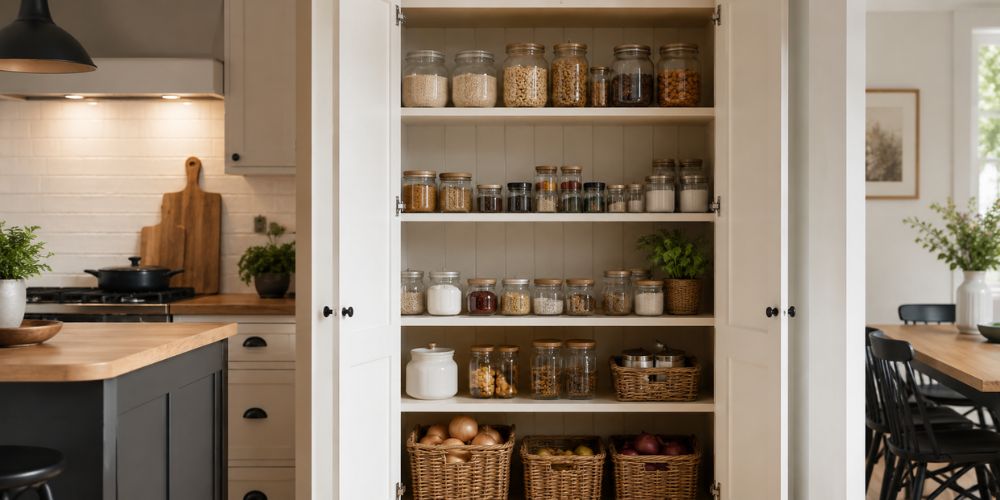
A pantry cabinet usually starts with a simple problem. The kitchen has food, jars, packets, appliances and cleaning bits tucked into too many places. Nothing has a proper home. The space works, but only just.
That is why learning how to build a pantry cabinet is really about building around daily habits. It is not only about boards, shelves and doors. It is about where the breakfast items go, where the heavy tins sit and how easy it feels to open the cabinet on a busy morning. For homeowners who want that made-to-fit feel, Horizon Bespoke Joinery can shape the storage around the kitchen instead of forcing the kitchen around standard units.
Start With the Mess, Not the Timber
A good pantry starts with the things already causing clutter. Before any cabinet is planned, the homeowner should look at what needs storing.
There may be tall cereal boxes, spice jars, oils, baking trays, small appliances, snacks, pet food or bulk shopping. Every kitchen is different. A family kitchen needs different storage than a quiet apartment kitchen.
This early step saves trouble later. A cabinet can look beautiful, but if the pasta jars do not fit upright, the design has already missed the point.
Measure the Space Properly
Measuring sounds basic, but it is where many pantry projects go wrong. The height and width matter, of course. So does the depth. A pantry that is too deep can become a dark tunnel where food gets lost at the back.
The door swing needs space too. Drawers need room to open. Handles should not hit nearby units. If the cabinet sits beside a worktop, appliance or wall return, those small gaps matter more than people expect.
A careful check should include:
- Full floor-to-ceiling height
- Width at the top and bottom
- Skirting board depth
- Wall unevenness
- Door opening space
- Nearby sockets and switches
Older homes can have walls that are slightly out of line. That is normal. It just means the cabinet needs careful fitting.
Decide What the Pantry Must Hold
The inside layout should come before the final look. A pantry cabinet is only useful when the shelves match the items.
Tall bottles need height. Small jars need visibility. Heavy tins need lower storage. Appliances need stronger shelves. If everything is given the same shelf height, the cabinet may look tidy at first but feel awkward within a week.
Adjustable shelves are often the safest option. Kitchen needs change. A family may need more snack storage one year, then more cooking storage the next. Fixed shelves can still work in areas that carry weight, but the whole cabinet should not be locked into one layout too early.
Build a Strong Cabinet Body
The cabinet body does the hard work. It carries the weight, holds the doors straight and keeps the pantry feeling solid over time.
Plywood, MDF and timber can all work depending on the finish and budget. What matters most is that the panels stay straight and take fittings properly. A tall pantry cabinet should not feel flimsy when the door opens.
The frame should be built square. Side panels, top panel, base panel and back support all need careful alignment. If the frame twists even slightly, the doors may never sit right.
This is not the place to rush. A pantry is opened daily. Weak construction shows up fast.
Make Shelves Work Like Real Storage
Shelves should be planned with reach in mind. The most-used items belong between waist and shoulder height. Heavy items should stay lower. Lighter items can sit higher.
Pull-out shelves can help in deeper cabinets. They stop food from disappearing at the back. Narrow door racks can also work for spices, sauces and smaller packets, as long as the hinges can handle the extra weight.
A practical pantry often has a mix of spaces:
- Tall shelves for bottles
- Shallow zones for jars
- Lower shelves for heavy tins
- Pull-out trays for deeper storage
- Open space for appliances
The cabinet should feel easy to use, not impressive for one photo.
Choose Doors That Suit the Kitchen
Doors decide how the pantry sits in the room. Flat doors look clean and modern. Shaker doors feel softer and more traditional. Glass can look lovely, but it only works when the inside stays organised.
Hinges should be strong. Pantry doors are used often, especially in family kitchens. Soft-close hinges can make the cabinet feel quieter and more finished.
The handles should be easy to grip. They should also match the rhythm of the kitchen. A beautiful handle placed at the wrong height becomes annoying every day.
What Type of Wood is Best For Pantry Shelves?
The best wood for pantry shelves is 3/4-inch (18–19 mm) plywood, especially cabinet-grade birch plywood or hardwood plywood. It provides the best balance of strength, durability, moisture resistance, and resistance to warping compared with solid wood or cheaper materials.
Why Plywood is The Best Choice:
Strong load capacity: Plywood has multiple cross-grain layers that distribute weight evenly, making it suitable for storing cans, jars, appliances, and heavy kitchen items.
Less likely to warp: Unlike solid wood, plywood is more stable when humidity levels change.
Long-lasting: Good-quality plywood holds screws well and maintains its shape for years.
Easy to finish: It can be painted, stained, or covered with edge banding for a clean cabinet-style appearance.
Other Suitable Wood Options:
1. Solid Hardwood (oak, maple, walnut)
Very strong and visually attractive.
Works well for open pantry shelving where appearance is important.
More expensive and can expand or contract with seasonal changes.
2. Hardwood edge-glued panels
A good alternative to traditional solid boards.
Provides a natural wood look with better stability.
Requires proper sealing to reduce moisture movement.
3. MDF (Medium Density Fiberboard)
Acceptable for lightweight pantry shelves.
Provides a smooth surface for painting.
Not ideal for heavy loads or areas exposed to moisture because it can swell if damaged.
Recommended Thickness:
Light pantry storage: 5/8 inch (16 mm) plywood
General pantry shelves: 3/4 inch (18–19 mm) plywood
Heavy items (appliances, bulk storage): 1 inch (25 mm) plywood or reinforced shelving.
