


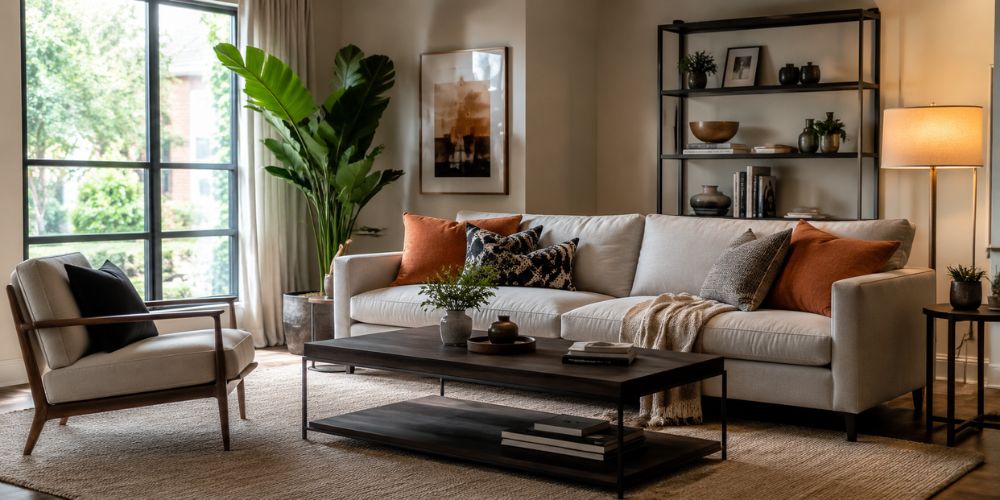
Furniture in a small living room should be arranged by placing essential pieces first, keeping clear walking paths, using space-saving furniture, and creating a balanced layout that makes the room feel open rather than crowded. The best arrangement depends on the room shape, natural light, and how the space is used.
Begin With the Daily Route
The first thing to check is not the sofa. It is the route through the room.
A person should be able to enter, sit down, stand up and leave without brushing past a table or twisting around a chair. If the living room connects to another room, that path matters even more.
This is where many compact rooms start going wrong. A lovely chair sits in the right colour but the wrong place. A table looks useful but lands exactly where feet need to pass. After a few days, the room starts feeling annoying.
A good small room feels easy before it feels stylish.
Let One Feature Lead
The sofa does not always need to face the feature directly. A slight angle can work. A chair can sit across from it. The point is not perfect symmetry. The point is that the room should make sense when someone walks in.
Once one feature leads, the other pieces stop floating around.
Be Tough With the Sofa
A sofa does not have to be tiny. It just has to be the right shape. Thick arms, deep seats and a boxy base take more from a small room than many people expect. Slimmer arms and raised legs can make the same seating feel lighter.
A corner sofa can be helpful if the room has one clean wall for it. In a tighter room, it may trap the layout. A neat sofa with one comfortable chair can sometimes feel more natural for everyday use.
Keep the Centre From Becoming Busy
The middle of the room gets used more than people notice. It is where someone walks through with tea. It is where children sit down. It is where guests step around the furniture without thinking.
A large square coffee table can take over that space. Round tables are easier to move around. Nesting tables can come out when needed then tuck away again. Some small rooms do better with no centre table at all.
A side table beside the sofa may be enough. Less furniture in the middle often makes the whole room feel calmer.
Make Storage Quiet
Small living rooms collect things quickly. Remotes, chargers, books, blankets and toys can spread across the room in a day. Without proper storage, every surface becomes a holding place.
The best storage does not make the room feel heavier. Low cabinets, alcove units and fitted shelves can keep daily items close without filling every wall. Closed storage works well for the messier things. Open shelves should have space to breathe.
A few books, a photo and one personal piece can warm the room. A shelf packed from edge to edge can make it feel crowded.
Leave Some Space Untouched
An empty corner can feel strange at first. Many homeowners want to fill it with a plant, lamp, basket or small chair. Sometimes that works. Sometimes it only adds more noise.
A small living room needs pauses. A bare section of wall can help. A clear corner can help too. Empty space is not wasted when it makes the rest of the room feel easier.
If a corner has a real purpose, use it. If it is only being filled because it looks unfinished, leaving it alone may be better.
How to Arrange Living Room Furniture With a TV?
Living room furniture should be arranged around the TV by placing the television at a comfortable viewing height, positioning the sofa directly opposite or at a suitable angle, and keeping enough distance for comfortable viewing. The layout should balance entertainment needs with easy movement and conversation space.
1. Place the TV as the main focal point
The TV is usually the central feature in modern living rooms, so it should be positioned where it is visible from the main seating area. Avoid placing it where windows create glare on the screen.
2. Position the sofa opposite the TV
The most common arrangement is placing the main sofa directly across from the TV. This provides a straight viewing angle and works well for family rooms.
For a comfortable viewing setup:
- Keep the centre of the TV close to eye level when seated.
- The ideal viewing distance depends on screen size, but many setups use around 1.5 to 2.5 times the TV’s diagonal screen size as a general guide.
3. Use an angled layout for corner spaces
If the TV is placed in a corner or the room has an unusual shape, position sofas and chairs at a slight angle toward the screen. This avoids forcing all furniture against one wall.
4. Keep seating flexible
A good TV layout should still support conversation. Add chairs or a small sofa that can face the main seating area instead of arranging every seat only toward the TV.
5. Avoid blocking walkways
Furniture should not interrupt the main paths through the room. Leave enough space around sofas, coffee tables, and TV units for comfortable movement.
6. Choose the right TV unit size
The TV stand or media unit should match the room proportions. A large entertainment unit can overwhelm a small living room, while a very small unit may look unbalanced with a larger screen.
7. Consider wall mounting the TV
Mounting the TV on the wall can save floor space and create a cleaner modern appearance. It also allows storage units or floating shelves to be placed underneath.
8. Use lighting to reduce screen glare
Avoid placing strong lights directly behind or opposite the TV. Use softer ambient lighting or side lighting to improve viewing comfort.
Conclusion
The best small living rooms do not feel overdesigned. They feel comfortable. The walkway is clear. The sofa suits the shape of the room. Tables are useful without getting in the way. Storage handles the everyday mess before it takes over.
When standard furniture keeps feeling slightly wrong, made to measure Living Room Furniture can make the room feel more settled. A small living room does not need more things. It needs better decisions, better use of the walls and furniture that makes daily life feel easier.
